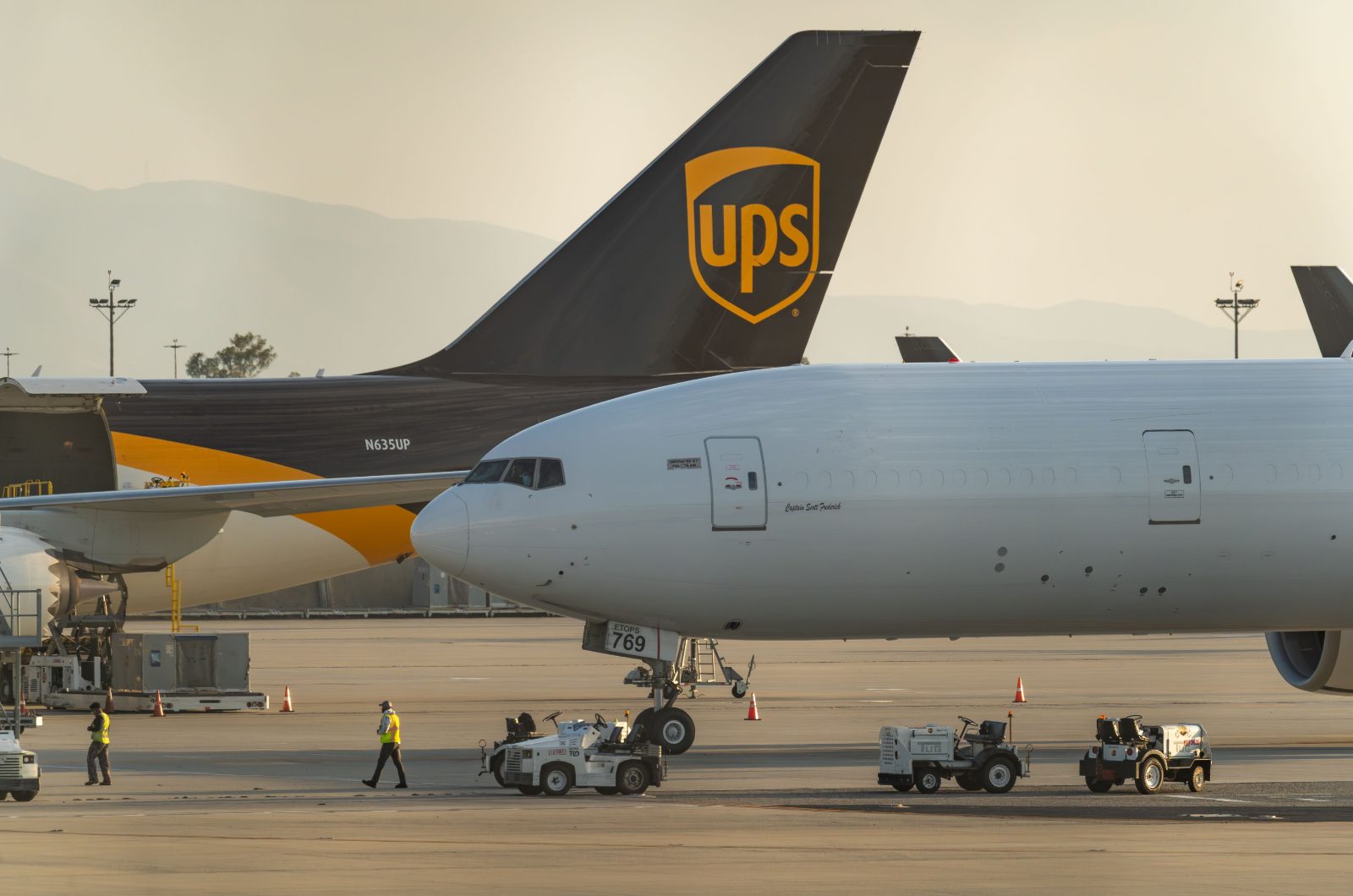
Photo by Soly Moses via Pexels. Pexels License.
Quick Answer: El Paso International Airport moved 1,824,157 passengers in the first half of 2026, essentially flat against the 1,826,631 it handled in the same stretch of 2025. Freight swung the other way, jumping 10.4 percent in June alone on the strength of inbound tonnage. Behind the traffic numbers sits a $316 million capital plan and roughly 3,450 acres of airport-controlled land now being marketed as an advanced manufacturing and logistics platform for the Borderplex.
El Paso International Airport is unusual among mid-sized American airports. Most of them are judged almost entirely on how many people walk through the terminal. El Paso is a landlord, an industrial developer, a cargo gateway and a military-adjacent airfield as much as it is a passenger terminal. The traffic numbers tell one story about the regional economy. The land holdings and the capital plan tell a different, and arguably more consequential, one.
How many passengers does El Paso International Airport handle?
The airport’s monthly aviation activity report, signed by Aviation Assistant Director for Business and Finance Debbie Olivas and dated July 31, 2026, puts total June 2026 passengers at 348,004. That is 9,280 fewer than the 357,284 recorded in June 2025, a decline of 2.6 percent.
Split the number and the symmetry is striking. Enplaned passengers, meaning people boarding in El Paso, came to 177,373, down 2.5 percent. Deplaned passengers, meaning arrivals, came to 170,631, down 2.7 percent. The two halves of the market moved together, which is what you expect at an airport whose traffic is dominated by origin-and-destination travel rather than connecting flows.
What do the 2026 year-to-date numbers show?
Through the first six months of 2026, El Paso handled 1,824,157 total passengers against 1,826,631 over the same period in 2025. That is a gap of 2,474 passengers, or one-tenth of one percent. Enplanements were down 0.2 percent at 920,870, and deplanements were flat at 903,287 versus 903,660.
| Measure | June 2026 | June 2025 | Change | YTD 2026 | YTD 2025 | Change |
|---|---|---|---|---|---|---|
| Total passengers | 348,004 | 357,284 | -2.6% | 1,824,157 | 1,826,631 | -0.1% |
| Enplaned | 177,373 | 181,908 | -2.5% | 920,870 | 922,971 | -0.2% |
| Deplaned | 170,631 | 175,376 | -2.7% | 903,287 | 903,660 | 0.0% |
How does 2026 compare with the past decade?
The airport’s ten-year passenger series puts the current plateau in context. Full-year totals ran 2,929,362 in 2017 and 3,260,556 in 2018 before reaching 3,517,053 in 2019. The pandemic cut traffic to 1,491,148 in 2020, then recovery carried the airport to 2,821,175 in 2021, 3,667,439 in 2022, 3,904,110 in 2023 and a decade-high 4,038,530 in 2024. In 2025 the total eased to 3,838,968.
That 2024-to-2025 dip of roughly 200,000 passengers, followed by a flat first half of 2026, is the single most important trend line for anyone trying to read El Paso’s consumer and business travel economy. The airport is running a few hundred thousand passengers a year below its 2024 peak but comfortably above every pre-2022 year on record.
| Year | Total passengers |
|---|---|
| 2017 | 2,929,362 |
| 2018 | 3,260,556 |
| 2019 | 3,517,053 |
| 2020 | 1,491,148 |
| 2021 | 2,821,175 |
| 2022 | 3,667,439 |
| 2023 | 3,904,110 |
| 2024 | 4,038,530 |
| 2025 | 3,838,968 |
| 2026 (Jan-Jun) | 1,824,157 |
Is air cargo growing at El Paso International Airport?
Cargo is where the 2026 story gets interesting, because the monthly and year-to-date numbers point in opposite directions.
In June 2026 the airport handled 7,358.5 tons of freight, up 10.4 percent from 6,665.6 tons in June 2025. The gain came almost entirely from inbound freight: deplaned tonnage rose 17.4 percent to 4,480.8 tons, while enplaned tonnage rose just 1.0 percent to 2,877.7 tons.
Year to date, though, the picture reverses. Through June the airport moved 38,910.6 tons against 41,232.9 tons a year earlier, a decline of 5.6 percent. The entire shortfall is on the outbound side: enplaned freight fell 13.0 percent to 15,520.0 tons, while deplaned freight was effectively unchanged at 23,390.6 tons versus 23,395.5. For reference, the airport handled 83,183 tons of freight across all of 2025.
For a border city whose economy is wired into maquiladora manufacturing across the Rio Grande, that split matters. Inbound tonnage growing while outbound tonnage falls by double digits is consistent with an economy importing more components and parts than it is shipping out by air, with the finished goods moving by truck through the land ports instead. Air freight in El Paso has always been the high-value, time-sensitive sliver of a much larger surface trade corridor.
| Measure | June 2026 | June 2025 | Change | YTD 2026 | YTD 2025 | Change |
|---|---|---|---|---|---|---|
| Total freight | 7,358.5 | 6,665.6 | +10.4% | 38,910.6 | 41,232.9 | -5.6% |
| Enplaned | 2,877.7 | n/a | +1.0% | 15,520.0 | 17,837.4 | -13.0% |
| Deplaned | 4,480.8 | 3,816.4 | +17.4% | 23,390.6 | 23,395.5 | 0.0% |
Which airlines control El Paso’s market?
El Paso is a Southwest Airlines town, and the June 2026 market share figures leave no doubt about it. Southwest held 57.19 percent of the market. American Airlines was second at 21.24 percent, United third at 10.46 percent, Delta fourth at 5.72 percent, Frontier fifth at 4.19 percent and Alaska last at 1.15 percent.
| Airline | Market share |
|---|---|
| Southwest | 57.19% |
| American | 21.24% |
| United | 10.46% |
| Delta | 5.72% |
| Frontier | 4.19% |
| Alaska | 1.15% |
How many flights and seats does El Paso actually have?
In June 2026 the airport averaged 53 daily nonstop departures, one fewer than in June 2025. Yet daily seats rose 2.3 percent, from 7,003 to 7,162: airlines are flying slightly fewer but larger aircraft into El Paso.
Nonstop destinations in that month included Atlanta, Chicago O’Hare, Dallas Love Field, Dallas/Fort Worth, Denver, Houston Hobby, Houston Intercontinental, Las Vegas, Los Angeles, Phoenix, San Antonio, San Diego and Seattle, with Orlando operating as a seasonal route. Frontier, the only ultra-low-cost carrier in the mix, flew seven weekly flights to Las Vegas and seven to Denver.
Total aircraft operations in June came to 7,768, down 2.6 percent year over year, with 46,228 operations year to date against 47,850 in 2025. The composition is worth noting. Air carrier operations fell 7.6 percent year to date to 20,585. Air taxi operations rose 14.8 percent to 8,954. Military operations dropped 13.5 percent to 4,447, and general aviation slipped 3.1 percent to 12,242. The airport logged 94,499 total operations across all of 2025.
On the route development side, the City of El Paso announced in February 2026 that Southwest would add nonstop service between El Paso and Nashville International Airport, operating Mondays, Thursdays, Fridays and Sundays with a start date of October 1, 2026. The same announcement increased Southwest’s Austin service from three to four weekly flights and added Los Angeles frequencies. Mayor Renard U. Johnson and Airport Director Tony Nevarez were named in the release.
What is the airport building with $316 million?
In October 2025 the El Paso City Council approved the airport’s Fiscal Year 2025-2030 Capital Improvement Plan, a $316 million program. The breakdown is heavily weighted toward the airfield: more than $160 million for airfield safety and efficiency projects, $77 million for terminal upgrades and $78 million for non-aeronautical developments.
The funding stack is the part worth studying. Roughly $131 million comes from the Federal Aviation Administration, $100 million from Airport Enterprise funds, and $27 million from grants tied to the U.S. Department of Energy, the Economic Development Administration and the Texas Commission on Environmental Quality. Passenger facility charges, customer facility charges and contributions from Tax Increment Reinvestment Zone #14 round out the rest. The airport said at the time that it was managing $130 million in state and federal grants.
| Total plan | $316 million |
| Airfield safety and efficiency | More than $160 million |
| Terminal upgrades | $77 million |
| Non-aeronautical development | $78 million |
| FAA share | $131 million |
| Airport Enterprise funds | $100 million |
| DOE, EDA and TCEQ grants | $27 million |
| Annual passengers cited | Approximately 4 million |
What is the Advanced Manufacturing District?
The most consequential piece of non-aeronautical spending is the Advanced Manufacturing District, an approximately 250-acre campus funded in part through a federal Build Back Better award. The city broke ground on phase one at 9 a.m. on Wednesday, May 6, 2026, at the southwest corner of George Perry Boulevard and Global Reach Drive.
Phase one calls for new multi-tenant and standalone facilities aimed at small and medium-sized manufacturers and technology companies. The city has not published a dollar figure or job count for the phase, which is a gap worth watching as leases are signed.
City Manager Dionne Mack framed the broader capital plan in terms that make the strategy explicit, describing the airport as positioning itself as a key driver of economic development for the entire border region.
How much developable land does the airport control?
This is the part of El Paso International Airport that most residents never see and that most airport comparisons miss entirely. The airport markets roughly 3,450 acres of combined available land across five property districts, plus more than 900 acres of fully developed industrial and retail property.
The five districts are the Crosswinds Entertainment District, located within a mile of the airport entrance; the 601 Corridor Business District at about 1,900 acres; Butterfield Industrial Park at 588 acres; Global Reach Infinity Park, with 1,700 acres available for development inside a Tax Increment Reinvestment Zone covering 2,815 acres; and Boeing Business Park at nearly 220 acres. More than 200 commercial businesses and industrial operations already sit at Butterfield Trail Industrial Park, the Butterfield Trail Air Cargo Center and adjacent sites.
| District | Acreage |
|---|---|
| 601 Corridor Business District | About 1,900 acres |
| Global Reach Infinity Park | 1,700 acres available; 2,815-acre TIRZ |
| Butterfield Industrial Park | 588 acres |
| Boeing Business Park | Nearly 220 acres |
| Advanced Manufacturing District | Approximately 250 acres |
| Total available, five districts | 3,450 acres |
What does aviation contribute to the Texas economy?
The Texas Department of Transportation’s aviation economic impact study, produced with the Texas A&M Transportation Institute, provides the statewide frame. The Texas airport system includes 288 airports, of which 263 are general aviation and 25 are commercial service. The study estimates impacts for 277 of them, drawing the remaining 11 from other studies.
Statewide, Texas airports support an estimated 1.2 million jobs, $83 billion in total annual payroll and $240 billion in total annual output, which the study puts at roughly 8 percent of Texas gross state product. Commercial service airports account for the overwhelming majority: about 1.1 million jobs, $76.2 billion in payroll and $222.6 billion in output. General aviation airports account for 78,510 jobs, $6.8 billion in payroll and $17.0 billion in output.
Brian’s Take
When I look at El Paso International Airport, I do not see an airport with a passenger problem. I see an airport with a passenger plateau and a land strategy that is far more interesting than the plateau.
Flat is flat. Half a year at 1,824,157 passengers against 1,826,631 is not decline, it is a market that has found its level roughly 5 percent below the 2024 peak. A 2.6 percent June dip inside a flat six months is noise, not a trend. What I would actually watch is the cargo split: outbound air freight down 13 percent year to date while inbound holds steady is the kind of divergence that tells you something real about how goods are moving through the Borderplex.
The number that reframes the whole conversation is 3,450 acres. Most mid-sized airports are terminals with parking lots. This one is a terminal attached to an industrial land bank larger than many business parks in the state, with a 250-acre advanced manufacturing campus now under construction and a 2,815-acre reinvestment zone behind it. If that land leases up, the airport’s contribution to El Paso will be measured in tenants and payroll, not boardings. If it does not, the city will have spent $78 million on non-aeronautical development with thin returns to show. The leases signed over the next three years are the thing to track.
Frequently asked questions
How many passengers used El Paso International Airport in 2025?
The airport handled 3,838,968 total passengers in calendar 2025, down from a decade-high 4,038,530 in 2024 but above every year before 2022.
Which airline is biggest at El Paso International Airport?
Southwest Airlines, with 57.19 percent of the market in June 2026, well ahead of American at 21.24 percent and United at 10.46 percent.
Is El Paso air cargo growing or shrinking in 2026?
Both, depending on the window. June 2026 freight rose 10.4 percent year over year to 7,358.5 tons, but first-half freight fell 5.6 percent to 38,910.6 tons, with outbound tonnage down 13.0 percent.
What is the El Paso airport Advanced Manufacturing District?
It is an approximately 250-acre campus on airport property, funded in part by a federal Build Back Better award, that broke ground on phase one in May 2026 and targets small and medium-sized manufacturers and technology firms.
How big is the airport’s capital plan?
The Fiscal Year 2025-2030 Capital Improvement Plan totals $316 million, including more than $160 million for airfield work, $77 million for the terminal and $78 million for non-aeronautical development.
How much does aviation contribute to the Texas economy overall?
The TxDOT aviation economic impact study estimates 1.2 million jobs, $83 billion in annual payroll and $240 billion in annual output across 288 Texas airports, roughly 8 percent of gross state product.
Sources and Further Reading
- Executive Summary: June 2026 Aviation Activity Report — El Paso International Airport, City of El Paso
- Ten-Year Passenger Statistics, April 2026 — El Paso International Airport, City of El Paso
- City Council Approves Airport’s $316 Million Capital Improvement Plan — City of El Paso
- Media Advisory: El Paso International Airport Advanced Manufacturing District Groundbreaking — City of El Paso
- El Paso International Airport Adds Nashville Nonstop — City of El Paso
- Industrial Parks and Property Districts — El Paso International Airport Business Development
- Texas Airport System Economic Impact Study, Executive Summary — Texas Department of Transportation Aviation Division and Texas A&M Transportation Institute