Photo by K via Pexels (Pexels License).
Quick Answer: El Paso Electric has asked Texas regulators to approve two solar-plus-storage projects carrying a combined estimated capital cost of about $872 million. The Copperhead Energy Project inside El Paso would pair 200 megawatts of solar with 200 megawatts of battery storage, and the Black Mountain Energy Project near Afton, New Mexico would pair 100 megawatts of solar with 50 megawatts of storage. Both are targeted to be operational by the second quarter of 2028, and both came out of a 2025 procurement that drew 101 proposals against a stated need of 500 megawatts by the summer 2027 peak.
What is El Paso Electric asking to build?
On April 30, 2026, El Paso Electric filed an application with the Public Utility Commission of Texas, assigned Docket No. 59690, to amend its certificate of convenience and necessity to include the Copperhead and Black Mountain solar and battery storage facilities. The utility stated it is not seeking to change its rates in that proceeding, which makes this a pure generation-authorization case rather than a rate case. The intervention deadline was June 8, 2026.
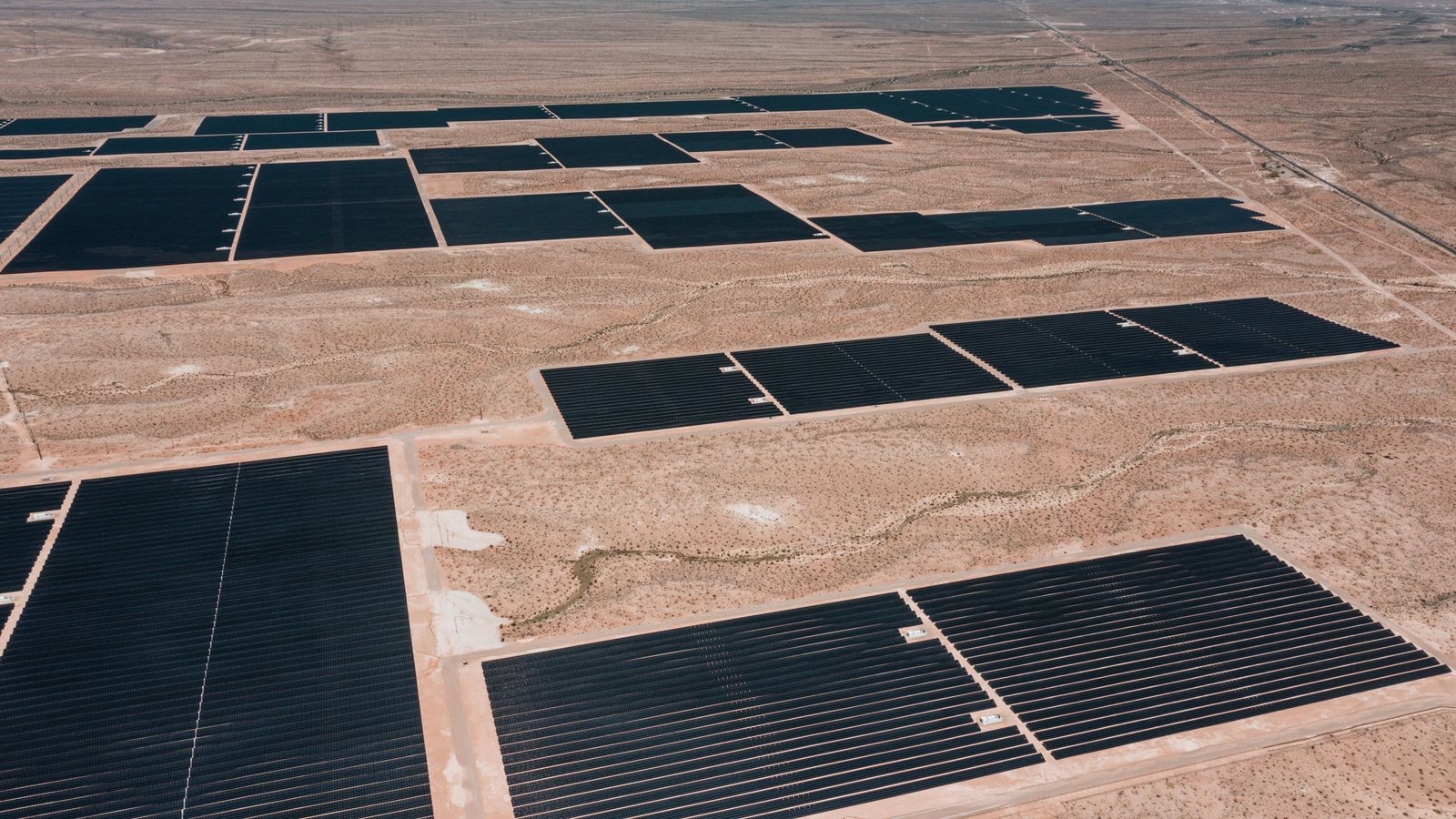
Copperhead is the larger of the two and sits inside the city of El Paso. It combines 200 megawatts of solar photovoltaic generation with a 200-megawatt battery energy storage system, for a 400-megawatt total as listed in the filing. Its interconnection point is the existing Wicked-to-Seaback 115-kilovolt line adjacent to the site, which is a meaningful cost advantage: a project that can reach an existing line next door avoids the long lead times and expense of building miles of new transmission.
Black Mountain is smaller and further out. It pairs 100 megawatts of solar with a 50-megawatt battery system for a 150-megawatt total, and is sited near Afton, New Mexico, interconnecting through a 345-kilovolt generation tie to the existing Afton North-to-Vado 345-kilovolt line. The filing treats both as Texas resources serving the Texas jurisdiction, notwithstanding Black Mountain’s New Mexico location.
| Project | Location | Solar MW | Storage MW | Total MW | Interconnection | Storage supplier |
|---|---|---|---|---|---|---|
| Copperhead Energy Project | City of El Paso, Texas | 200 | 200 | 400 | Wicked-to-Seaback 115 kV line | HiTHIUM ESS, four-hour duration |
| Black Mountain Energy Project | Near Afton, New Mexico | 100 | 50 | 150 | 345 kV tie to Afton North-to-Vado line | Tesla Megapack 2 XL |
| Combined | 300 | 250 | 550 | Both require a new high-voltage substation | Approximately $872 million combined |
Both projects use single-axis tracking solar modules supplied by SEG and Canadian Solar, and each requires construction of a new high-voltage substation. The $872 million figure is described in the filing as the cumulative estimated cash capital cost and explicitly excludes federal production and investment tax credits, so the net cost borne by the utility and ultimately its customers would be lower than the headline number.
Where did these projects come from?
Both are products of a competitive solicitation rather than a utility-conceived plan. El Paso Electric issued a Texas request for proposals on July 1, 2025 and received 101 proposals, from which it selected nine. The filing identifies a stated need of 500 megawatts by the 2027 summer peak, growing thereafter, and organizes the selected resources into two tranches: Tranche 1 totaling 985 megawatts and Tranche 2 totaling 647 megawatts. Copperhead and Black Mountain are both in Tranche 1.
Those numbers deserve attention. A utility that identified a 500-megawatt need by summer 2027 selected 985 megawatts in a first tranche and another 647 in a second, which is 1,632 megawatts in total, more than three times the near-term stated requirement. That is either a view that load will grow substantially beyond the 2027 figure, or a hedge against some selected projects failing to reach commercial operation, or both. Either way, the procurement is sized for a much larger system than the one El Paso Electric runs today.
The response rate is the other signal. Receiving 101 proposals for a mid-size utility solicitation indicates a deep developer market around the Borderplex, which is what you would expect given regional solar resources and the amount of transmission already in place along the Rio Grande corridor. Competitive depth of that kind is what lets a utility choose projects that interconnect to existing lines, as Copperhead does, rather than accepting whatever is available.
Why does the storage component matter?
The combined projects carry 300 megawatts of solar and 250 megawatts of battery storage, which is a storage-to-solar ratio of roughly 0.83 to 1. That is unusually high for a utility solar portfolio, and it says something specific about what El Paso Electric is buying.
Solar output in the Chihuahuan Desert peaks around midday. Summer system peaks in the El Paso area come later, in the late afternoon and early evening, after the sun has started to fall but air conditioning load has not. Solar alone does not serve that peak well. Pairing nearly a megawatt of storage with every megawatt of solar converts a midday resource into one that can discharge at the hours the system actually needs, which is why the filing treats Copperhead as 400 megawatts of combined capability rather than 200 megawatts of solar with an accessory.
Copperhead’s battery is described in the filing as a HiTHIUM energy storage system with four-hour duration. Black Mountain uses Tesla Megapack 2 XL units. A four-hour battery is sized to cover a typical evening peak window, not to provide multi-day backup, which is the standard economic trade-off in utility-scale storage procurement today.
How does this sit alongside the rate review?
The generation filing landed in the same year as a contentious Texas rate proceeding. In a statement issued on February 20, 2026, Kelly Tomblin said El Paso Electric firmly stands by its original filing, which sought to recover approximately $1.55 billion in infrastructure investments made since 2020 for reliability and growth in Texas.
The statement identified the authorized return on equity as the central disagreement. El Paso Electric had requested a 10.7 percent return on equity and received an increase from 9.35 percent to 9.4 percent, the first change in four years. The statement said current and proposed rates do not fully cover the cost of that infrastructure and warned that a low authorized return may affect future investment and Texas growth.
That tension is the practical backdrop to the $872 million generation request. A utility earns its return on invested capital, so the allowed return on equity determines how attractive it is to put another $872 million into the ground. A five-basis-point increase, from 9.35 percent to 9.4 percent, against a request for 10.7 percent, is a very different financial signal than the one the company asked for. Whether that changes anything about Copperhead and Black Mountain is unknown, since the company filed the generation application in April 2026 after the February rate decision.
What else is El Paso Electric building on the grid?
Generation is only part of the capital program. A July 13, 2026 presentation on grid modernization and resilience, prepared for a New Mexico legislative committee, laid out a set of distribution and transmission projects that run alongside the solar build.
The largest is a replacement of the Eddy County high-voltage direct current tie, a joint El Paso Electric and PNM project operated by Xcel’s Southwestern Public Service. The existing 1983-vintage tie is derated to 105 megawatts. The replacement would be a voltage source converter HVDC link rated at 200 megawatts, with in-service anticipated in 2031. El Paso Electric is filing a certificate application in New Mexico and anticipates a Texas filing. No cost figure was given.
On the distribution side, the North Loop battery project in Clint, Texas is an 8-megawatt, 32-megawatt-hour installation on a 13.8-kilovolt feeder at a total cost of approximately $13 million. The utility is also running a distributed battery program with Base Power, with 6 megawatts deployed and a target of 9.9 megawatts by October 2026, and is deploying traveling wave relays across all of its 345-kilovolt lines within three years, with trip times of one to eight milliseconds and fault location within 300 meters.
Demand-side programs are scaling as well. The utility’s Energy Wise smart thermostat program grew from 17,126 enrolled devices in 2025 to 20,852 in 2026, an increase of 21.8 percent, delivering an average combined peak reduction of roughly 15,809 kilowatts in 2025 and about 16,445 kilowatts in 2026 to date. An advanced distribution management system project, including fault location, isolation and service restoration and volt-VAR optimization, is described as the core of distribution grid modernization, with feeder relays being replaced in both Texas and New Mexico.
What does this mean for El Paso businesses?
For commercial and industrial customers in El Paso County, the most consequential detail is the timing mismatch. The stated need is 500 megawatts by the summer 2027 peak, but Copperhead and Black Mountain are not expected to be operational until the second quarter of 2028. That leaves at least one summer in which the identified capacity requirement exists and these two resources do not. Other Tranche 1 projects may fill the gap, but the filing does not establish that, and reserve margins in a constrained service territory are what determine whether large customers face curtailment requests on the hottest afternoons.
The second consideration is cost recovery. El Paso Electric told regulators it is not seeking to change rates in Docket No. 59690, which means the $872 million is being authorized now and recovered later through a separate proceeding. Businesses evaluating long-term energy costs in the Borderplex should read the certificate case and the rate case as two halves of the same decision: the first establishes the investment, the second determines who pays for it and on what schedule.
Reliability improvements are the offsetting benefit, and several are nearer-term than 2028. Automated substation load restoration at new substations is designed to restore service in under a minute when a second transformer has available capacity, and traveling wave relays on the 345-kilovolt system locate faults within 300 meters. For a manufacturer or a data-handling operation, the difference between a one-minute restoration and a crew-dispatched outage is measured directly in scrapped product and lost throughput. The utility is also running a 250-home residential solar and storage demonstration called Creation Energy on the New Mexico side of its territory, which functions as a pilot for distributed resources it may later scale on the Texas side.
Frequently asked questions
How much will El Paso Electric’s new solar projects cost?
The filing puts the cumulative estimated cash capital cost of the Copperhead and Black Mountain projects at approximately $872 million, excluding federal production and investment tax credits. The company did not publish a per-project split.
How much capacity are the two projects?
Combined, 300 megawatts of solar and 250 megawatts of battery storage. Copperhead is 200 megawatts of solar with 200 megawatts of storage, listed as 400 megawatts total; Black Mountain is 100 megawatts of solar with 50 megawatts of storage, listed as 150 megawatts total.
When will the projects come online?
Both are expected to be operational by the second quarter of 2028. Each requires construction of a new high-voltage substation.
How much new generation is El Paso Electric procuring overall?
Its 2025 Texas request for proposals drew 101 proposals, of which nine were selected. The filing lists Tranche 1 at 985 megawatts and Tranche 2 at 647 megawatts against a stated need of 500 megawatts by the summer 2027 peak.
What happened in the Texas rate review?
El Paso Electric sought to recover approximately $1.55 billion in infrastructure investment made since 2020 and requested a 10.7 percent return on equity. It received an increase from 9.35 percent to 9.4 percent, and said in a February 20, 2026 statement that the rates do not fully cover its infrastructure costs.
Sources and Further Reading
- Application of El Paso Electric Company to Amend Its Certificate of Convenience and Necessity to Include the Copperhead and Black Mountain Solar and Battery Storage Facilities, Docket No. 59690, Public Utility Commission of Texas
- Statement from Kelly Tomblin on the Public Utility Commission of Texas Decision on El Paso Electric’s 2025 Rate Review, El Paso Electric
- Rate Review Explained: Driving Reliability and Resiliency through Grid Mod, presentation to the New Mexico Water and Natural Resource Committee